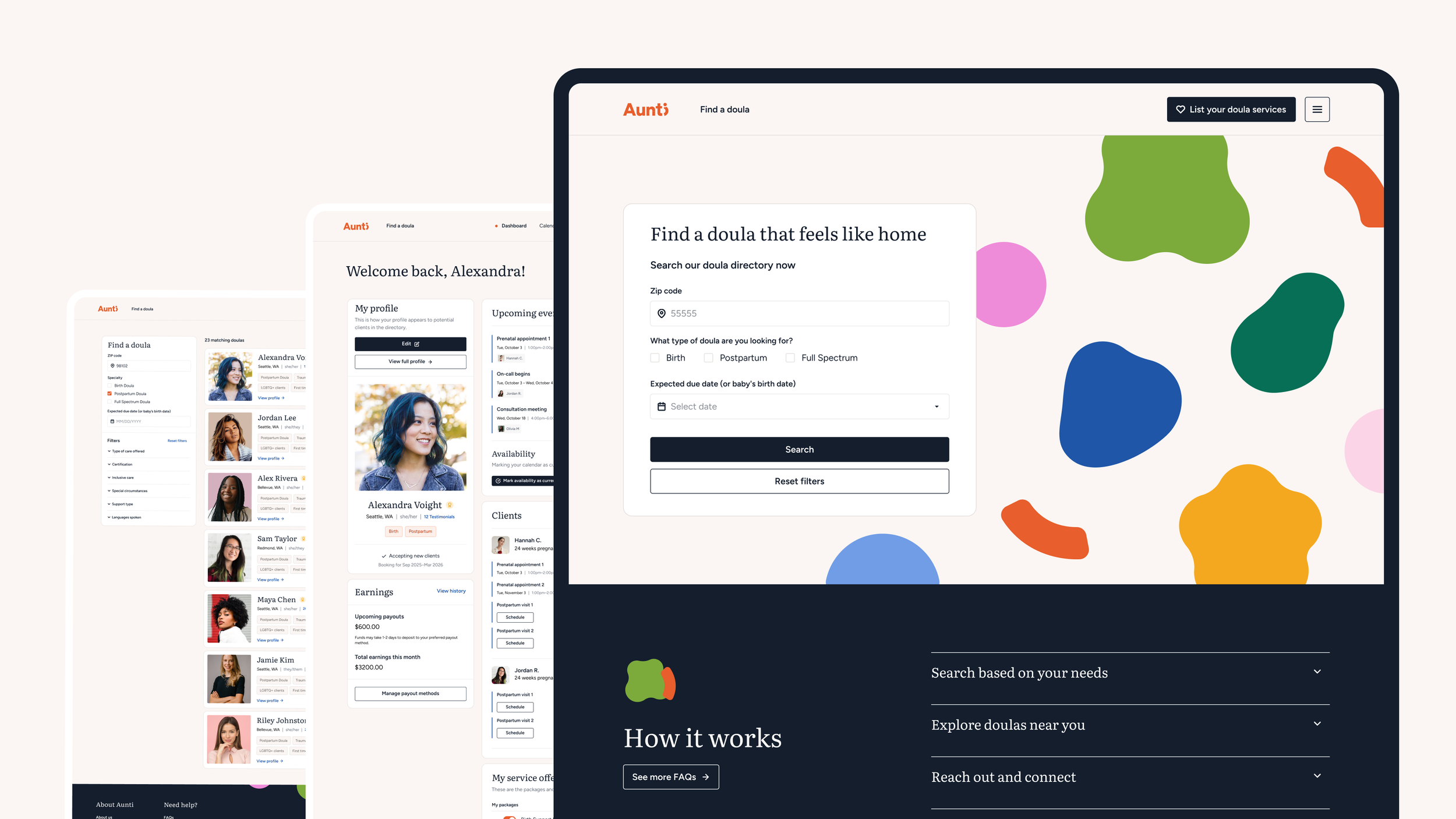
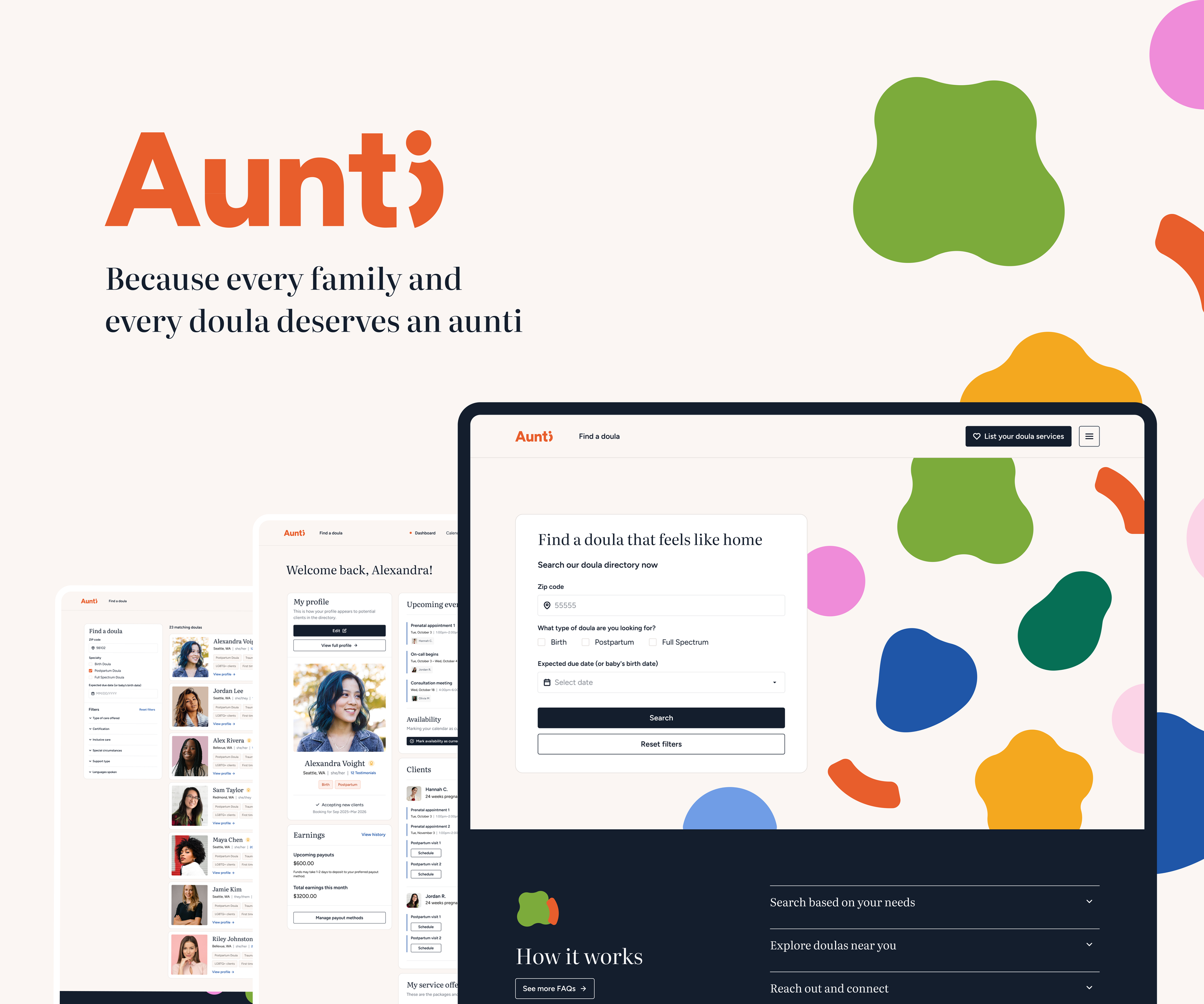
The Modern Home for Doula Care
Aunti is a platform designed to make doula care easier to discover, book, and manage. We power doulas with the tools to grow their business — and connect families to the trusted support they need, all in one place.
My Role: Founder & Product Designer
Feb. 2025 – May 2026
Built Aunti from idea to live MVP. Owned product strategy, research, UX/UI, brand, roadmap, and early growth, working directly with doulas to understand their practices and translate their needs into product opportunities.
30+ doulas onboarded · National MVP launched · 0→1 product strategy · User research · UX/UI · Brand · Go-to-Market · Social Media Content Strategy
The Problem
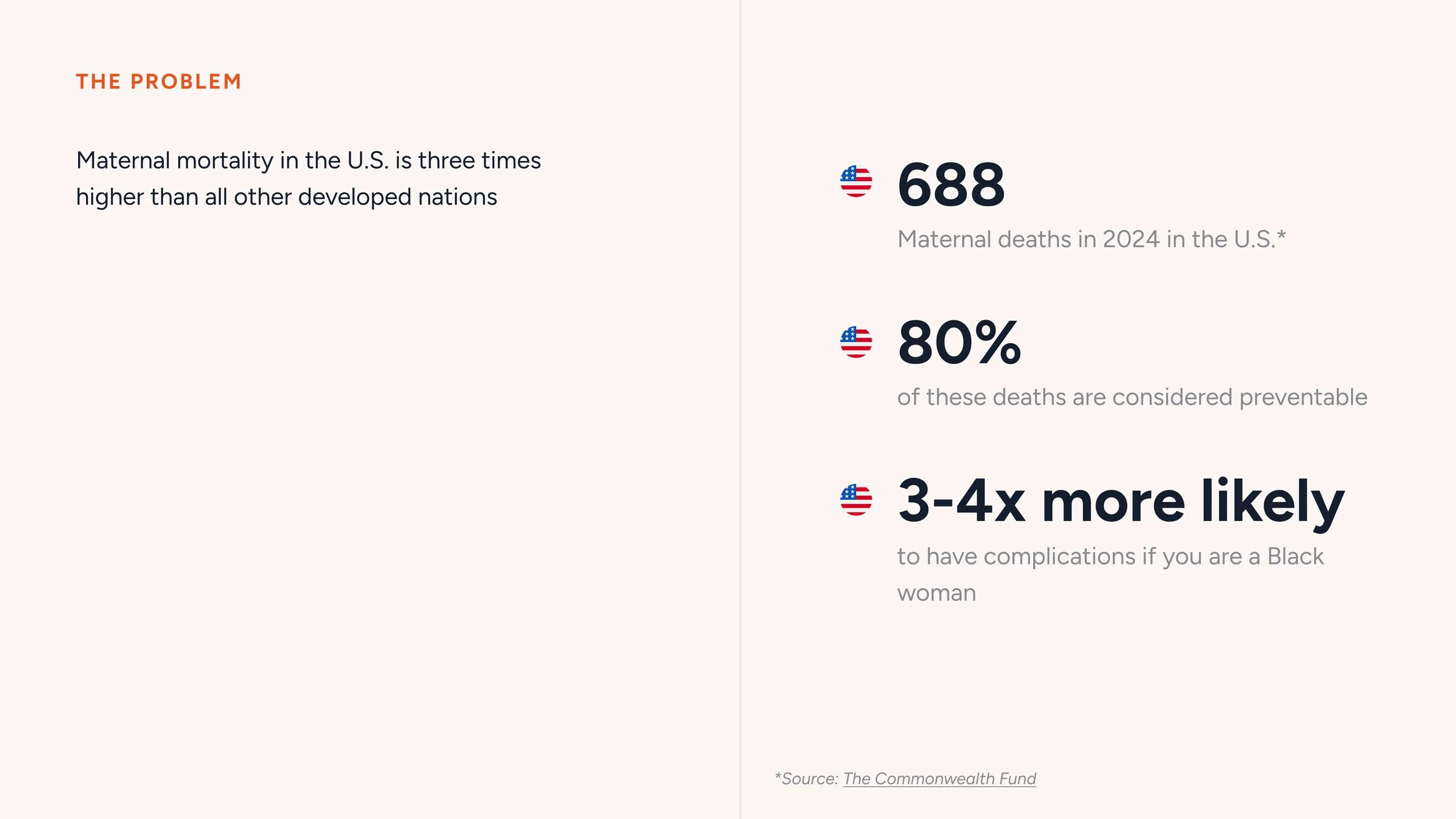
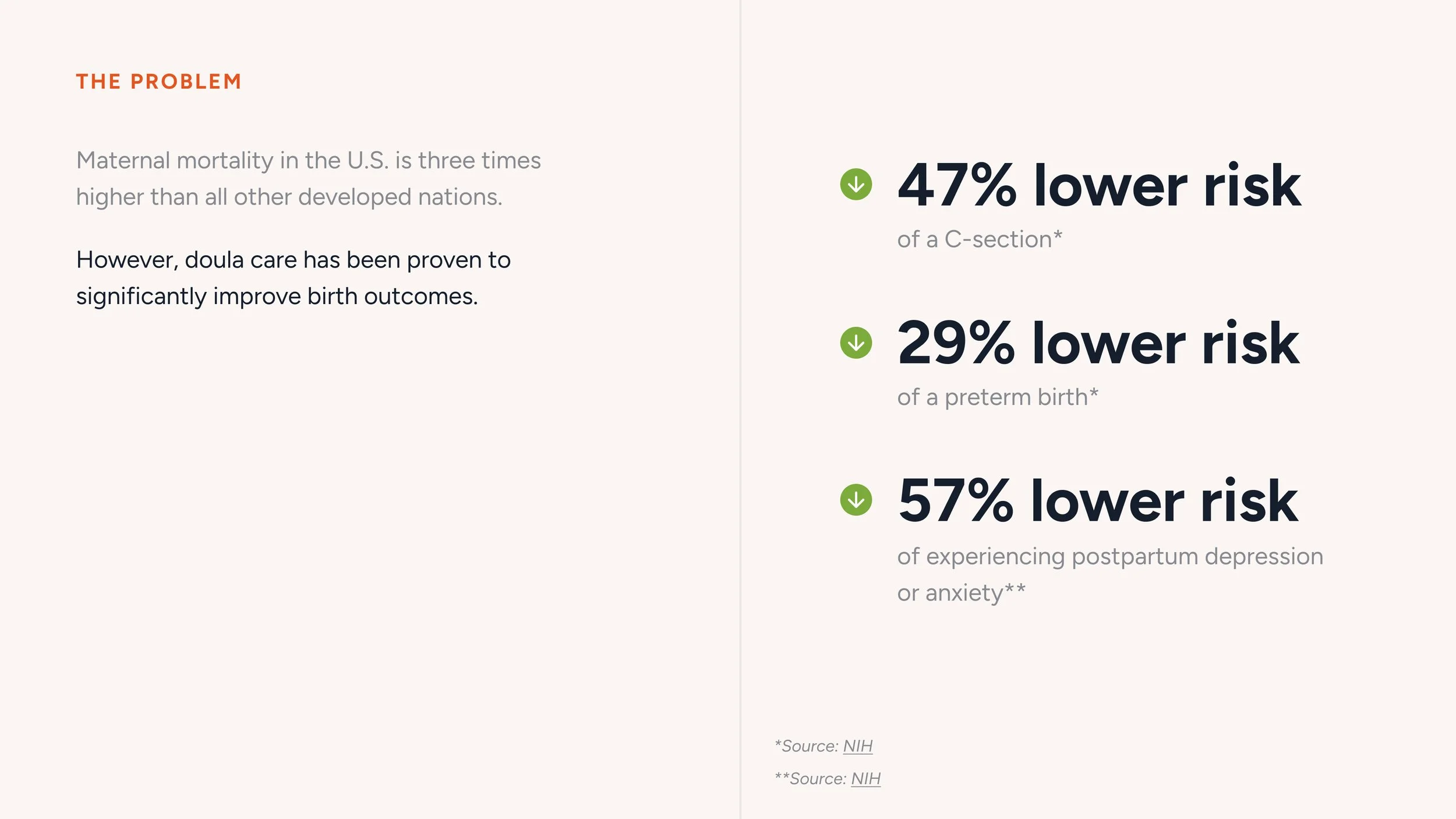
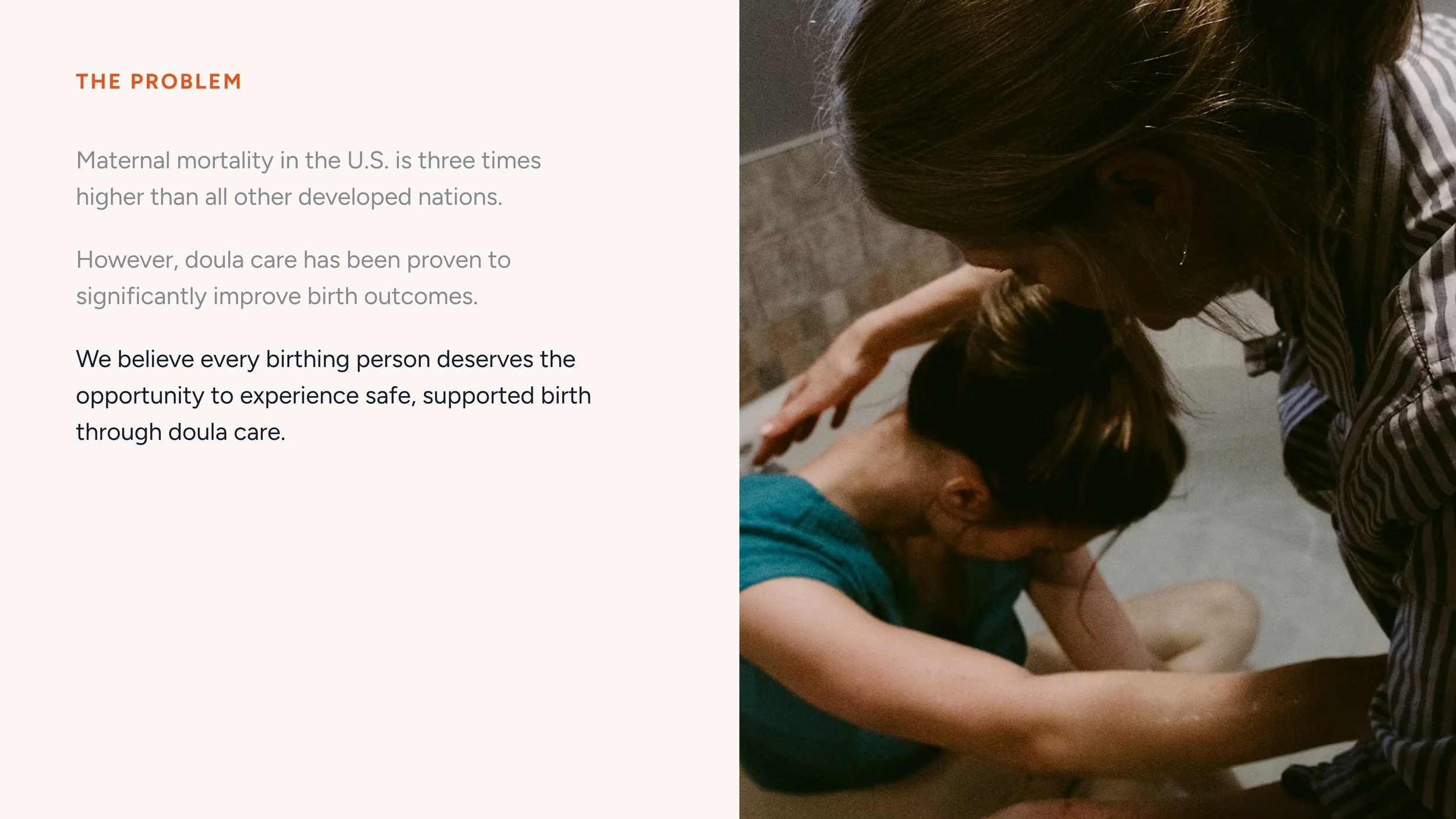
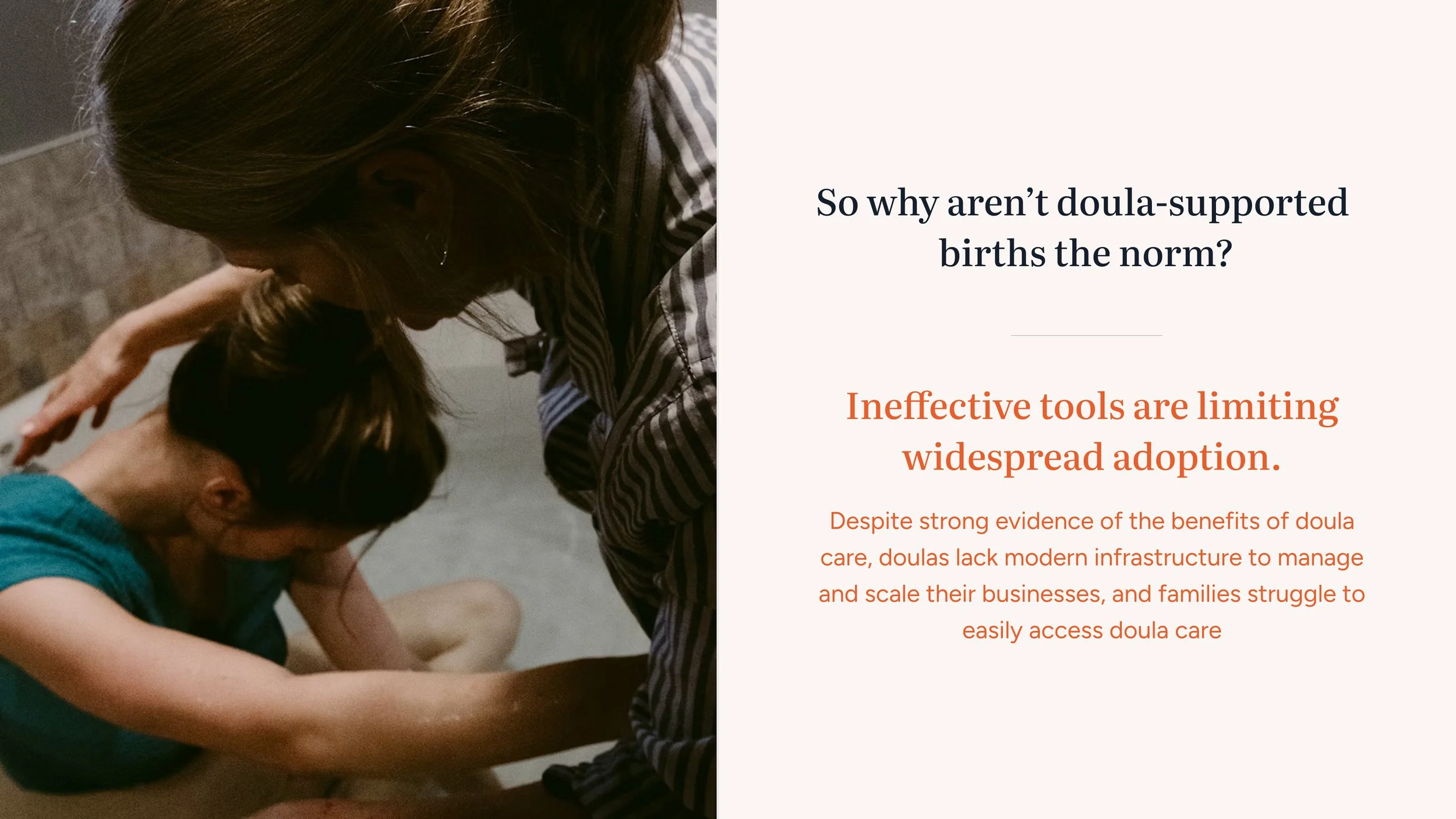
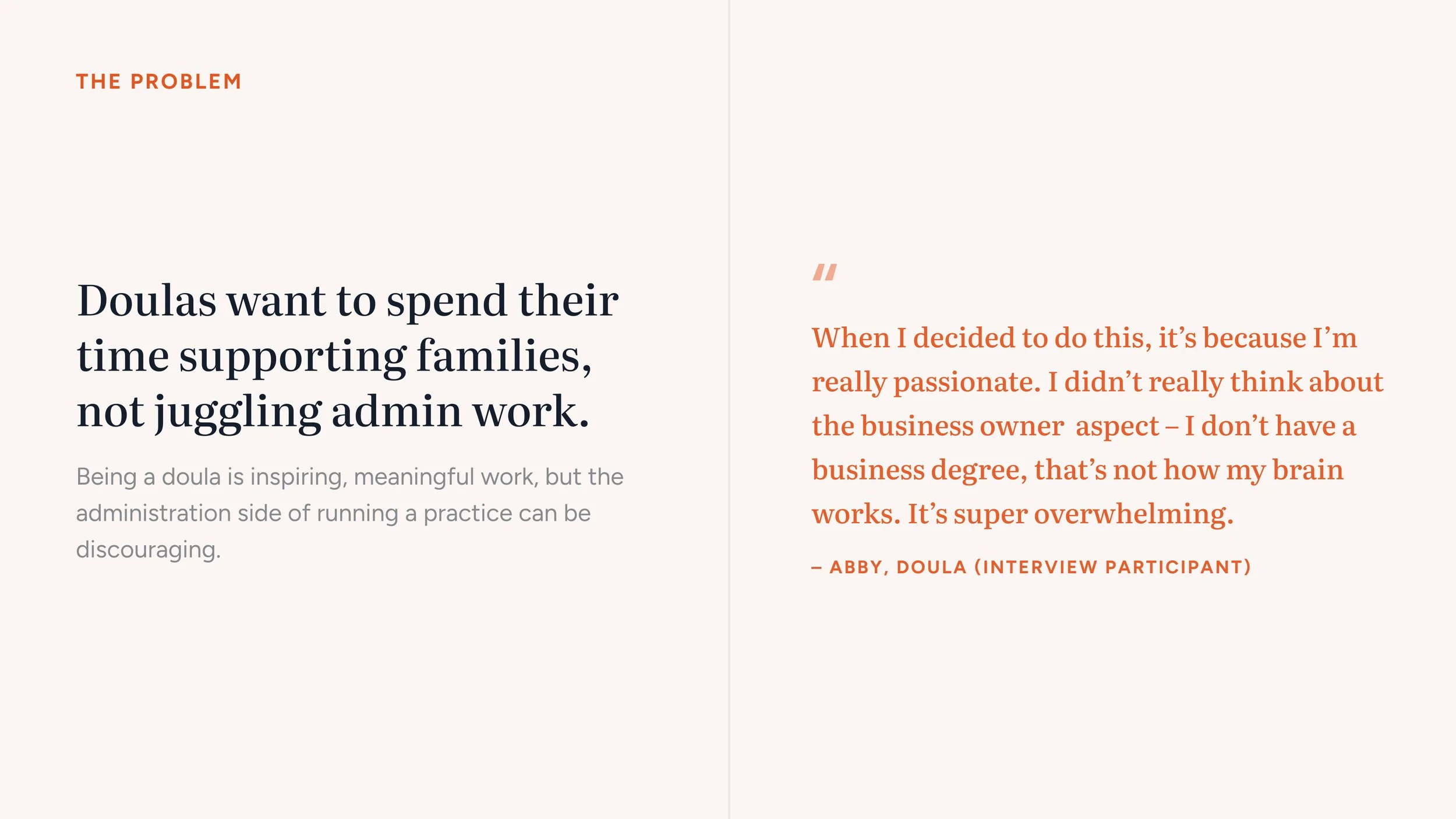
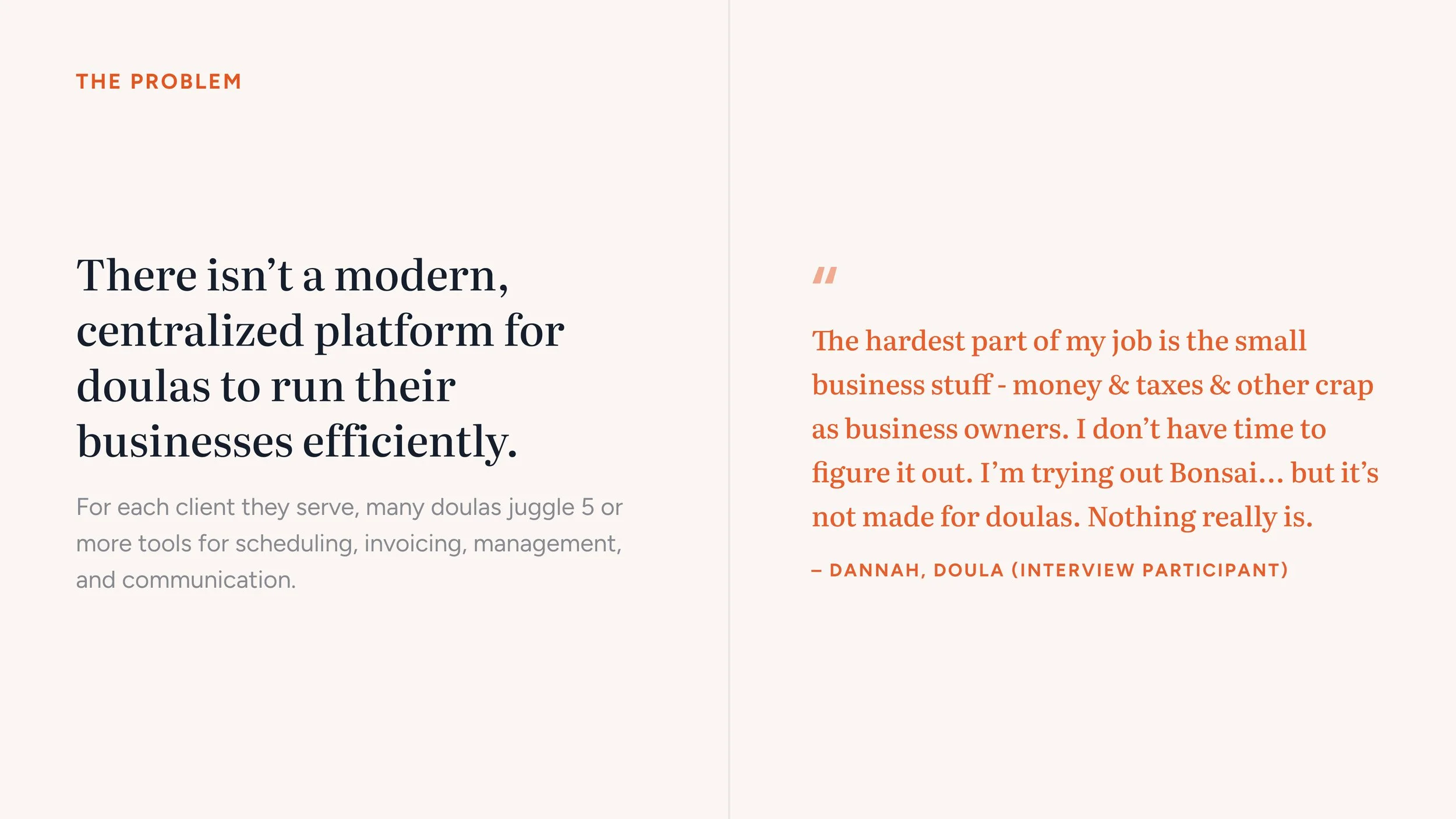
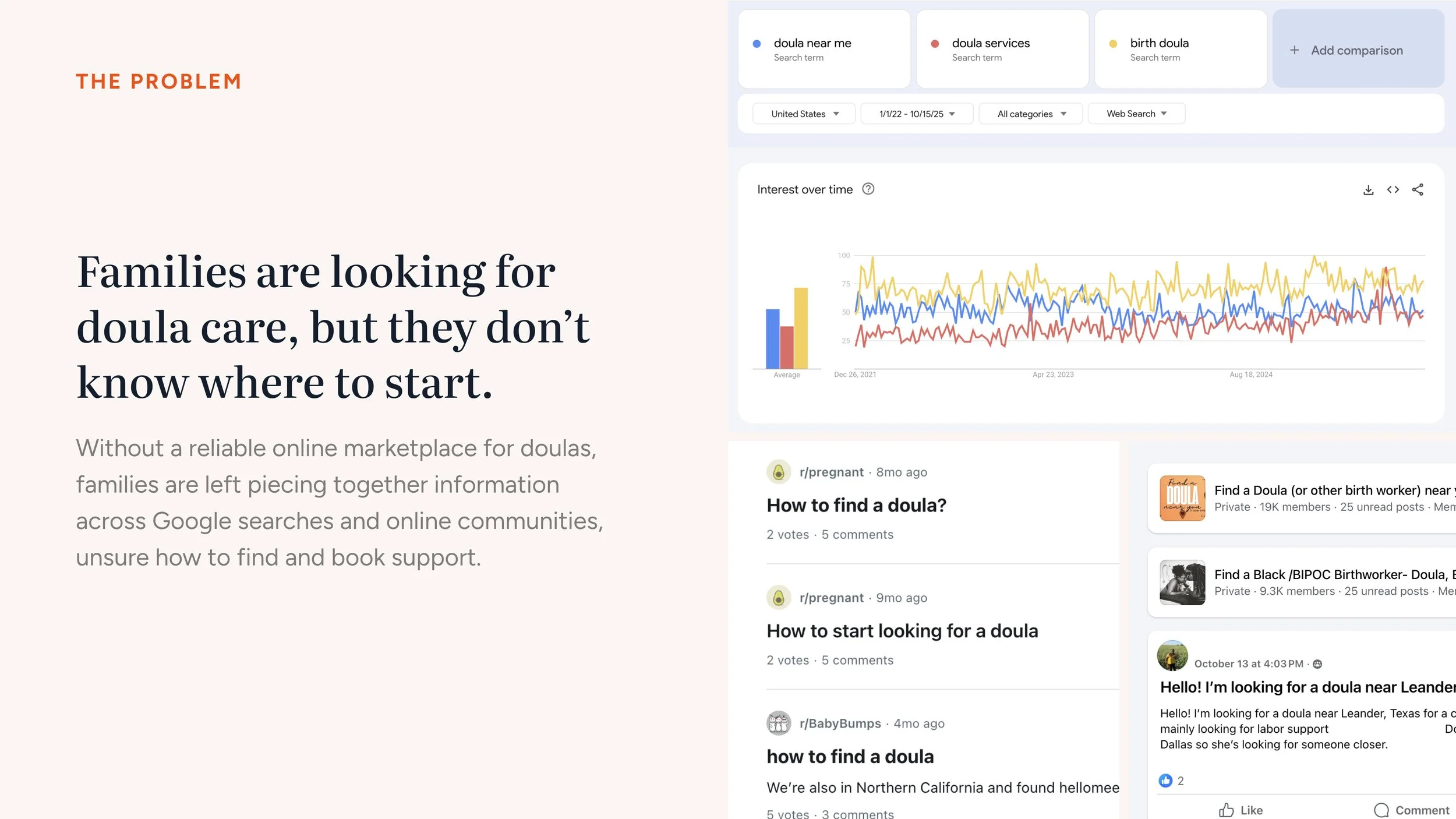
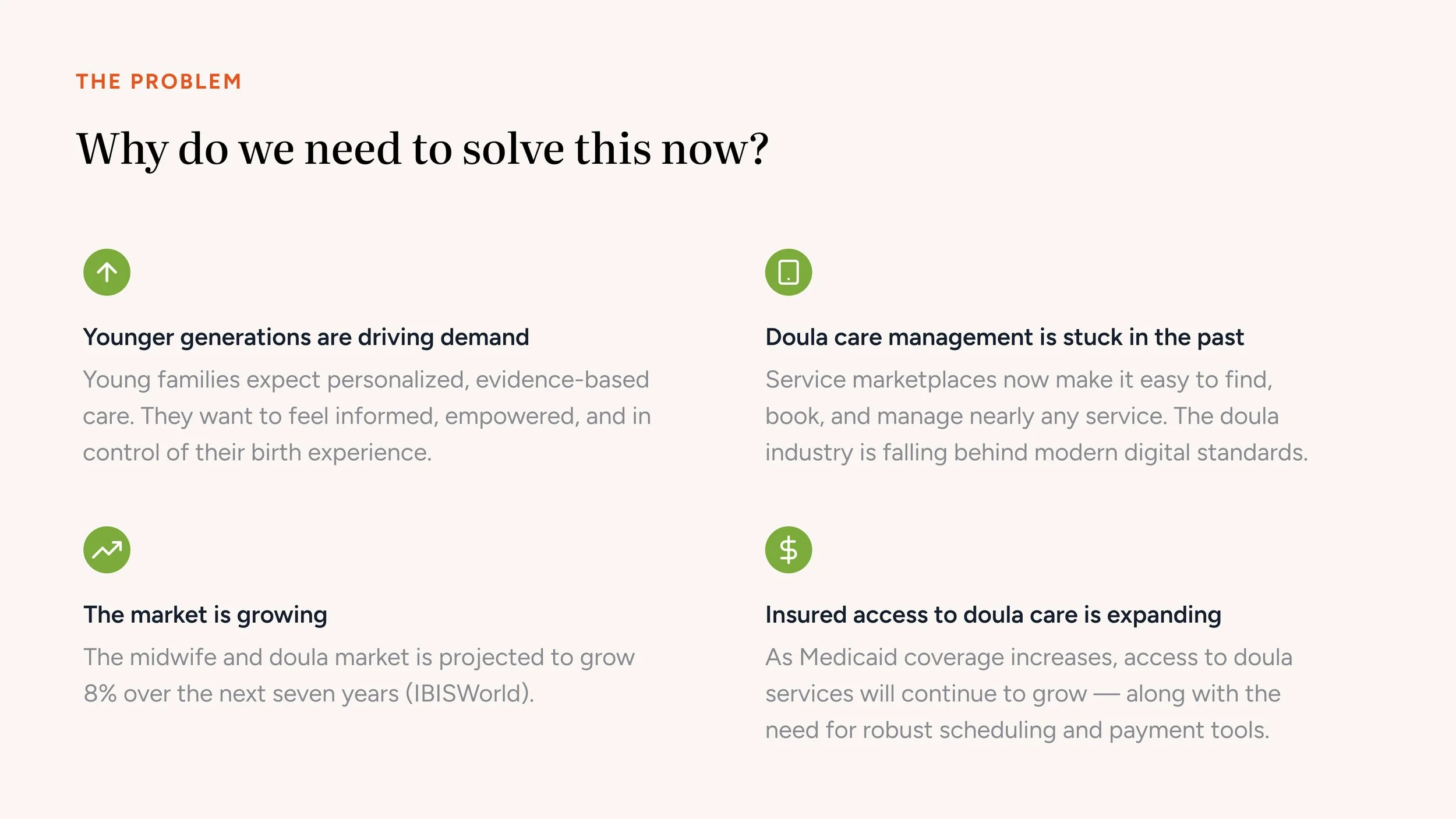
Doula care has strong evidence behind it — meaningfully lower rates of C-section, preterm birth, and postpartum depression — but doula-supported births still aren't standard. What's missing is infrastructure. Doulas run their practices across five or more disconnected tools per client, patching together scheduling, invoicing, client management, and communication with software that was never built for this work. On the other side, families have no reliable place to look, so finding a doula means piecing together Google results and private Facebook groups. Demand is rising and insurance coverage is expanding, but there isn’t an infrastructure built to support that growth, yet.
The Solution
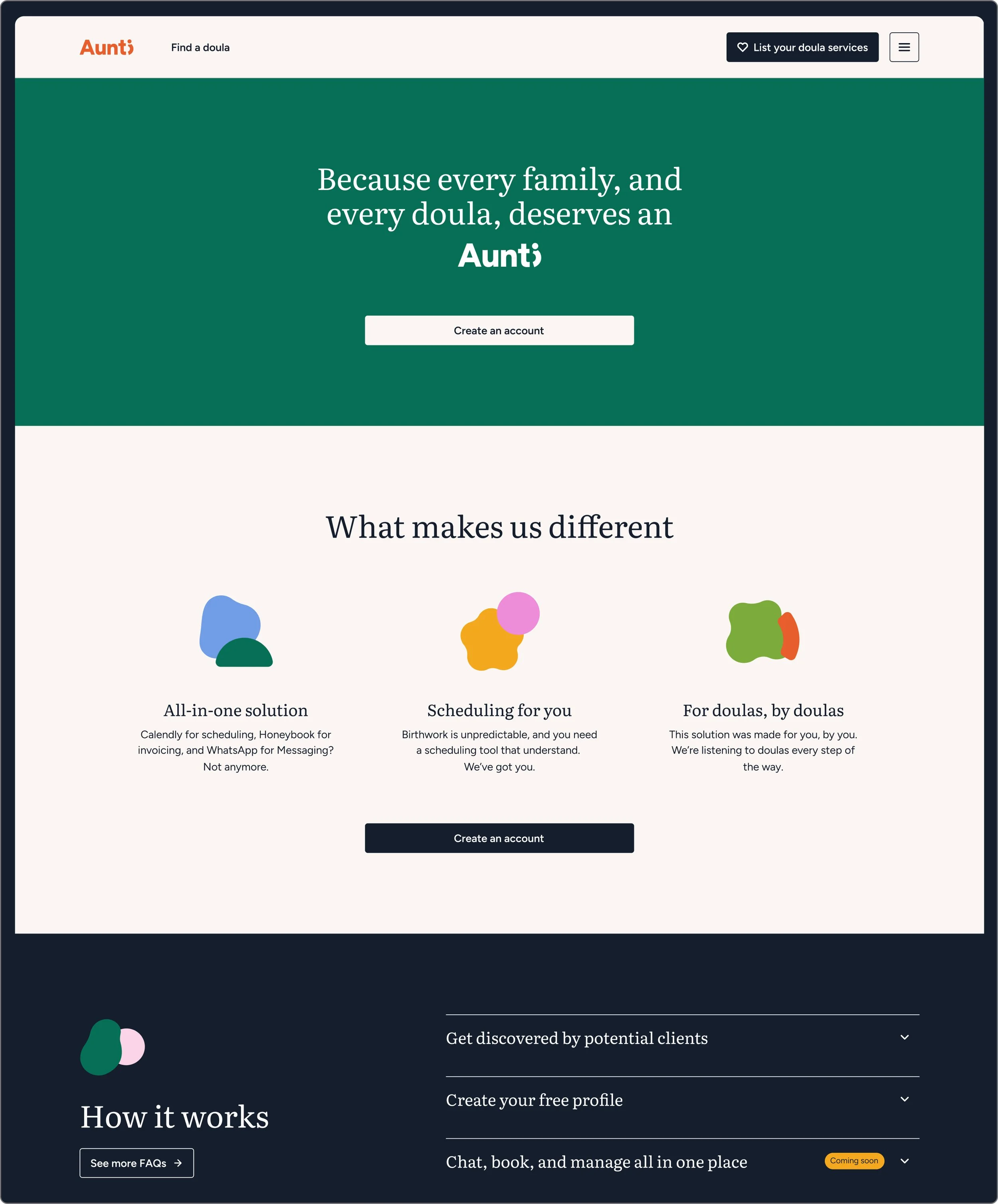
A web platform that connects clients and doulas, giving both sides the tools to manage care and operations seamlessly, all in one place
For Doulas
Manage clients, schedule appointments, handle invoicing, and communicate seamlessly.
For Families
Search for doulas, book, and manage appointments and services effortlessly.
Future Vision
Expand into community knowledge sharing, contract templates, note-taking support, and more.
The Product Roadmap
MVP: A Modernized Doula Directory
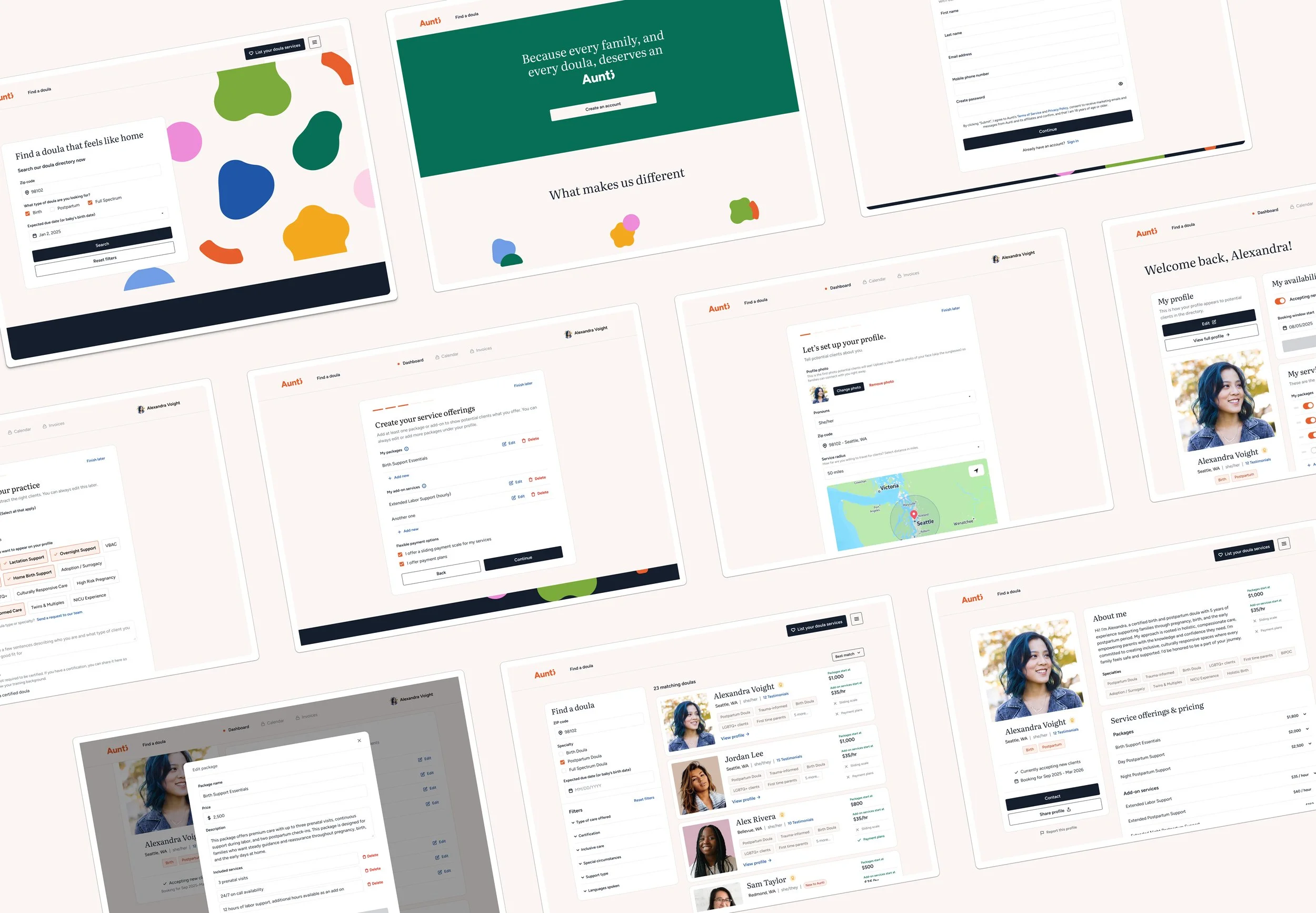
In January 2026, we launched a simple doula directory aimed at expanding our network of doulas and increasing brand awareness. The more doulas who joined the platform, the more quickly families could discover meaningful value. Our priority was to establish a solid foundation for future releases.
Doulas could create an account, list their services and availability, and families could search by zip code, doula type, specialty tags, and other relevant filters. Within 24 hours of launch, we had 30 doulas sign up.
Our MVP is live! Click here to launch the website.
Key Feature: Doula Profile Creation
Doulas set up their profile by sharing who they are, their specialties, and the services they offer.
Key Decisions
Certification is optional at signup and filterable in search. Doula certification today still stands fairly unregulated; requiring it would have blocked doulas from listing at all. Instead, it's a credential doulas can add and families can filter on — the preference lives with the family rather than in the sign-up gate.
Pricing is built around packages rather than hours, because that's how doulas already quote. The form mirrors their business instead of asking them to translate it. Sliding scale and payment plans surface publicly on the profile, to provide immediate transparency to families.
Key Feature: The Doula’s Dashboard
One view for profile, availability, service offerings and testimonials, all editable in place
Key Decisions
Availability is a toggle — taking clients or not — plus the window it applies to. Because the window is forward-looking, a doula who's full right now can still signal that she's open for births in a later stretch, which matters when families are searching months ahead by due date. It was the simplest thing that answered the only question a family has before reaching out: are you open to a conversation, and for when?
Packages and add-ons each toggle on and off independently. Offering both doesn't lock a doula into a fixed structure — they can lead with packages, sell purely hourly, or mix the two, and change that from one season to the next. A doula who isn't offering overnight support this season turns it off and turns it back on later with everything intact, so her public profile reflects what she's offering now rather than what she once set up.
Testimonials are requested rather than written. The doula sends a request, the client responds, and social proof accumulates from the people it should come from.
Key Feature: Doula Directory
Families search by zip code, doula type, and due date, then narrow the results by specialty, certification, inclusive care, special circumstances, support type, and languages spoken.
Key Decisions
Cultural fit and lived experience are filters rather than something families have to find by reading every bio. Inclusive care, languages spoken, and special circumstances sit alongside logistics because for many families they're the deciding factor, not a secondary preference.
Due date is a search input, not just a profile field. It matches against the availability windows doulas set, so results only include people actually open for that timeframe — families aren't reaching out to doulas who are not taking on new clients
Pricing is public on every profile and in the results list, as this is a key deciding factor for the family
V1: Doula Care Management Platform
The MVP got doulas onto the platform and made them findable. V1 was the reason they'd stay — the tools to run their practice, all in one place.
V1 was designed around the shape of the work rather than the shape of a service business. Doula work is organized around an unpredictable biological event, not a calendar: labor can come weeks early or run past 41 weeks, birth support has no defined length, and the thing that most often determines when a visit should happen is how many weeks pregnant someone is. Doula care is deliberately flexible, and the product has to leave room for the every doula to run their practice in the way they want to.
Our V1 Concepts included:
Client timelines driven by gestational week
Appointments with flexible set up, duration, and the option to be in-person or remote
Automatic blocking for on-call periods, overnight recovery, and travel between visits
Intake, contracts, and payment triggered in sequence instead of assembled by hand each time
Messaging that kept client communication out of a doula's personal inbox
I designed the key concept screens and tested it with 10 doulas.
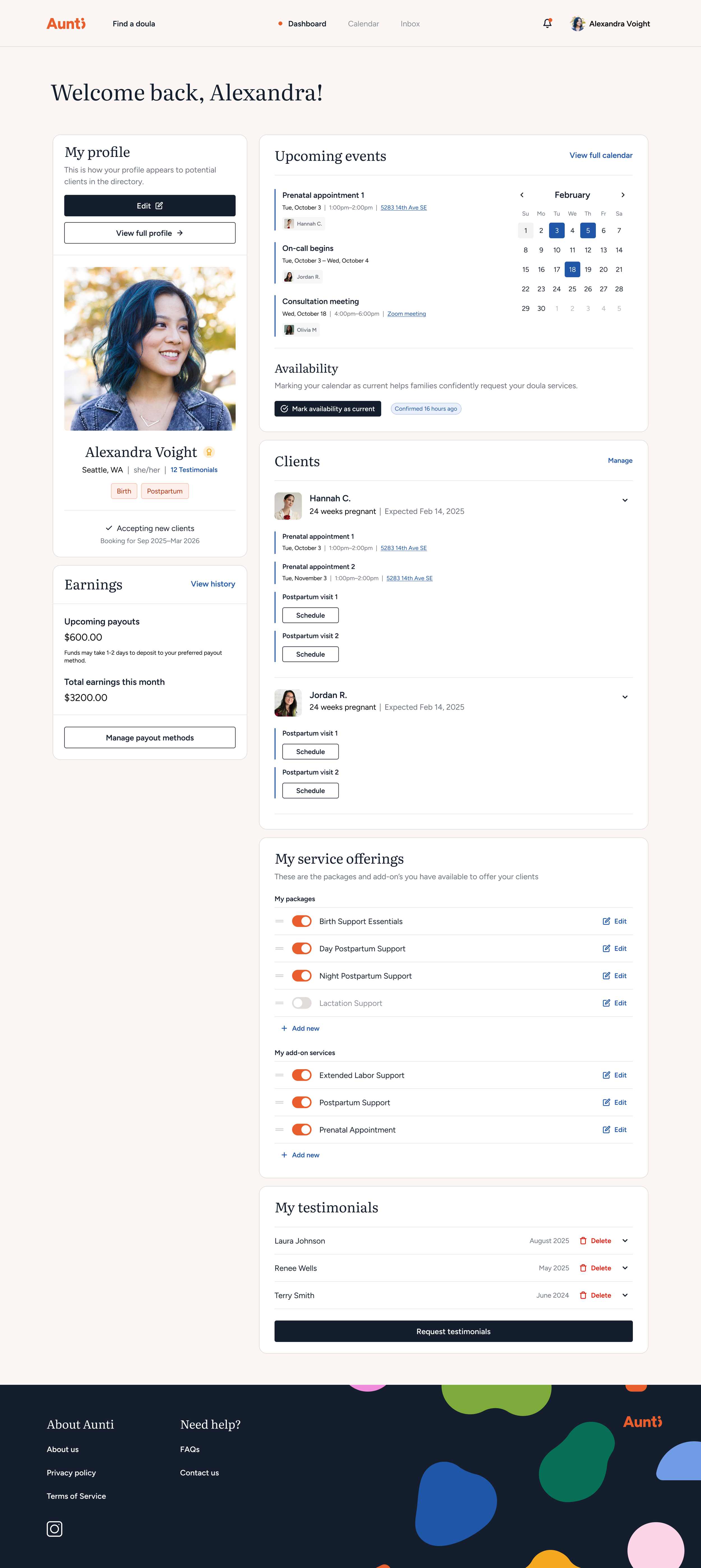
Concept Screen | Doula Dashboard
A home base for managing the practice
Surface the most important information at a glance: upcoming care details, active clients, and earnings
Balance client care and business operations within the same workspace
Give doulas a clear starting point for understanding what needs their attention
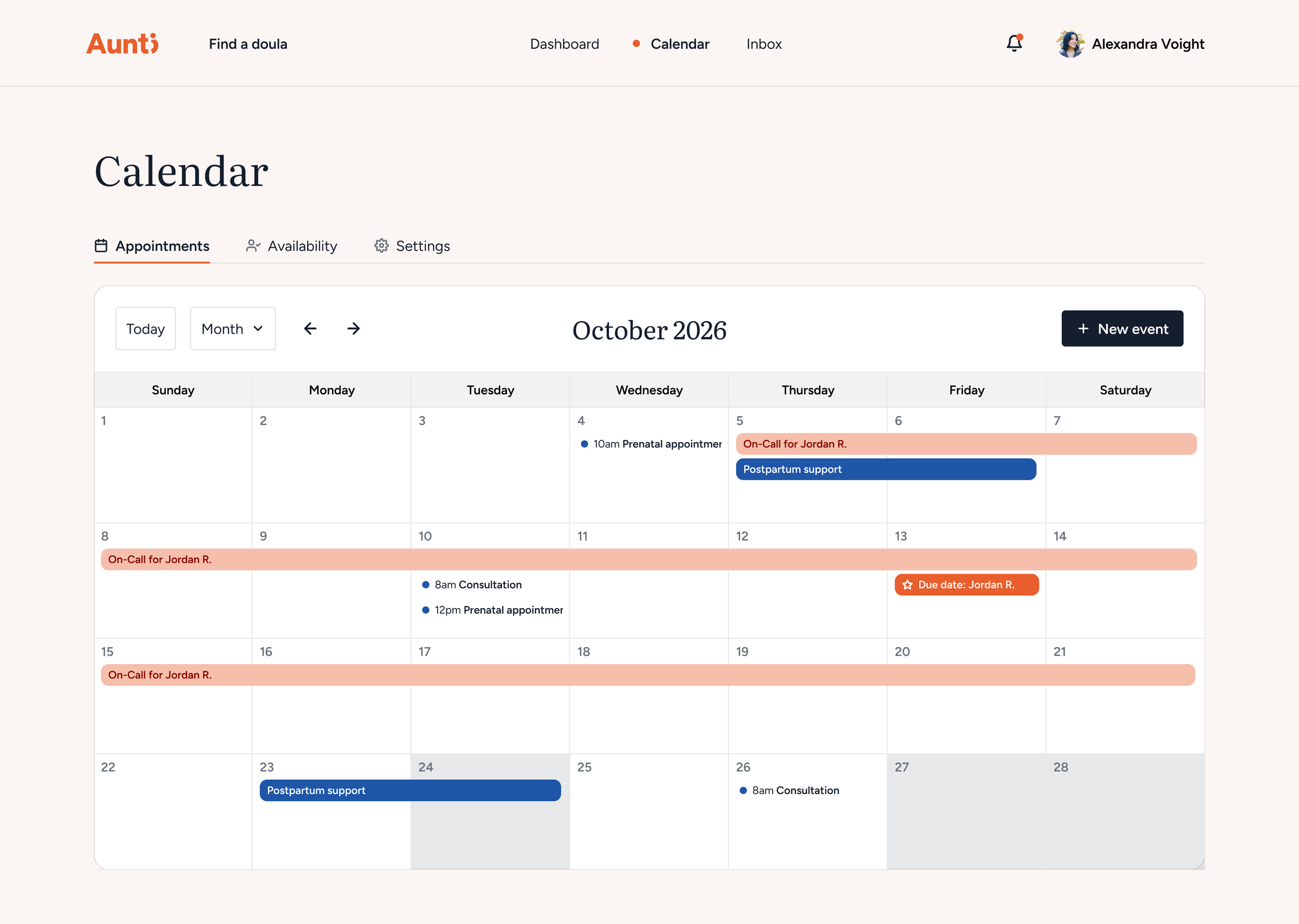
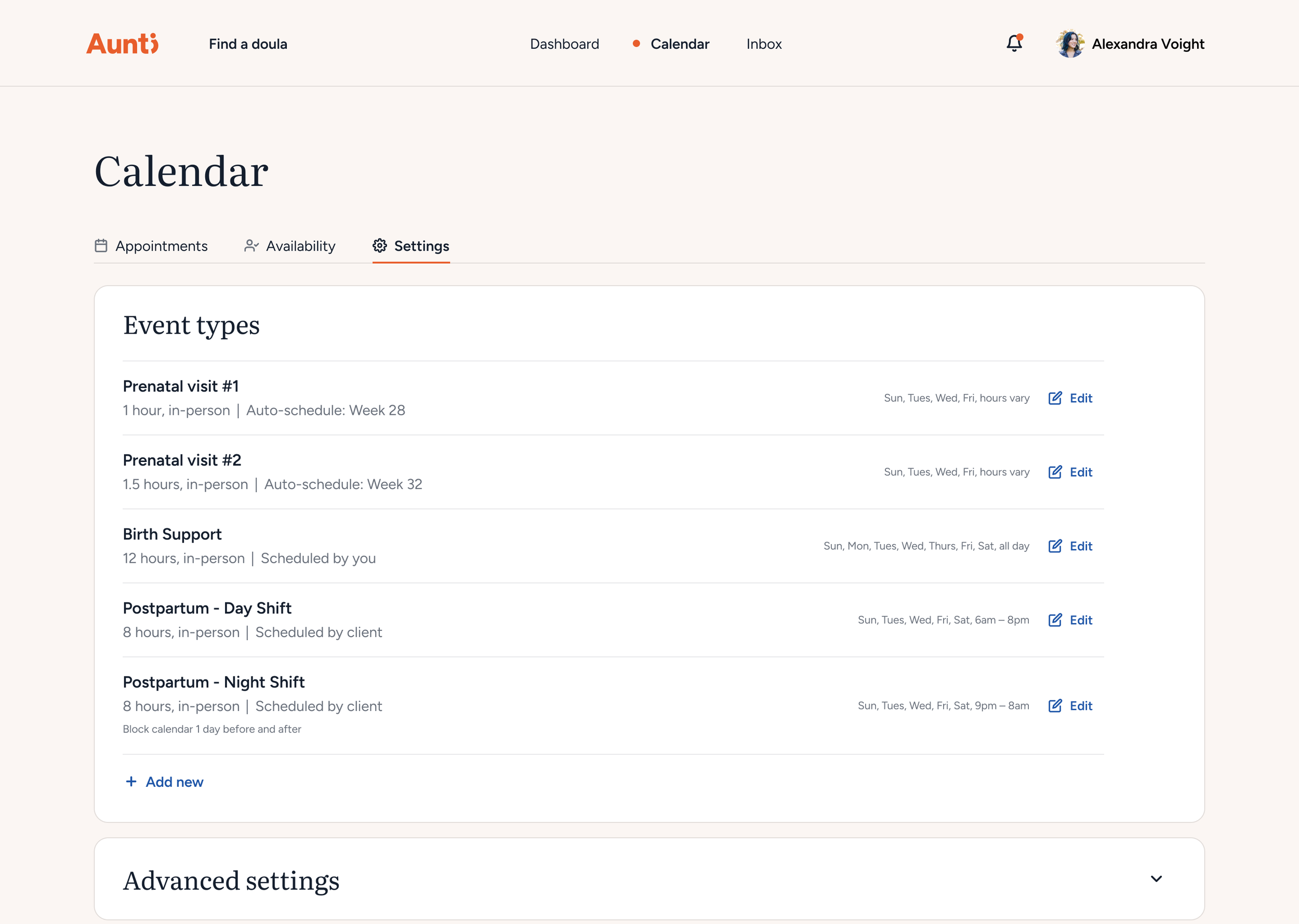
Concept Screen | Calendar
Built for the unpredictability of doula work
Bring consultations, prenatal visits, postpartum care, due dates, and on-call periods into one view
Distinguish between scheduled appointments and ongoing availability commitments
Give doulas flexibility to manage different types of events without forcing everything into the same structure
Account for the fact that births are unpredictable and availability often needs to extend beyond a single calendar event
Concept Screen | Messaging + Invoicing
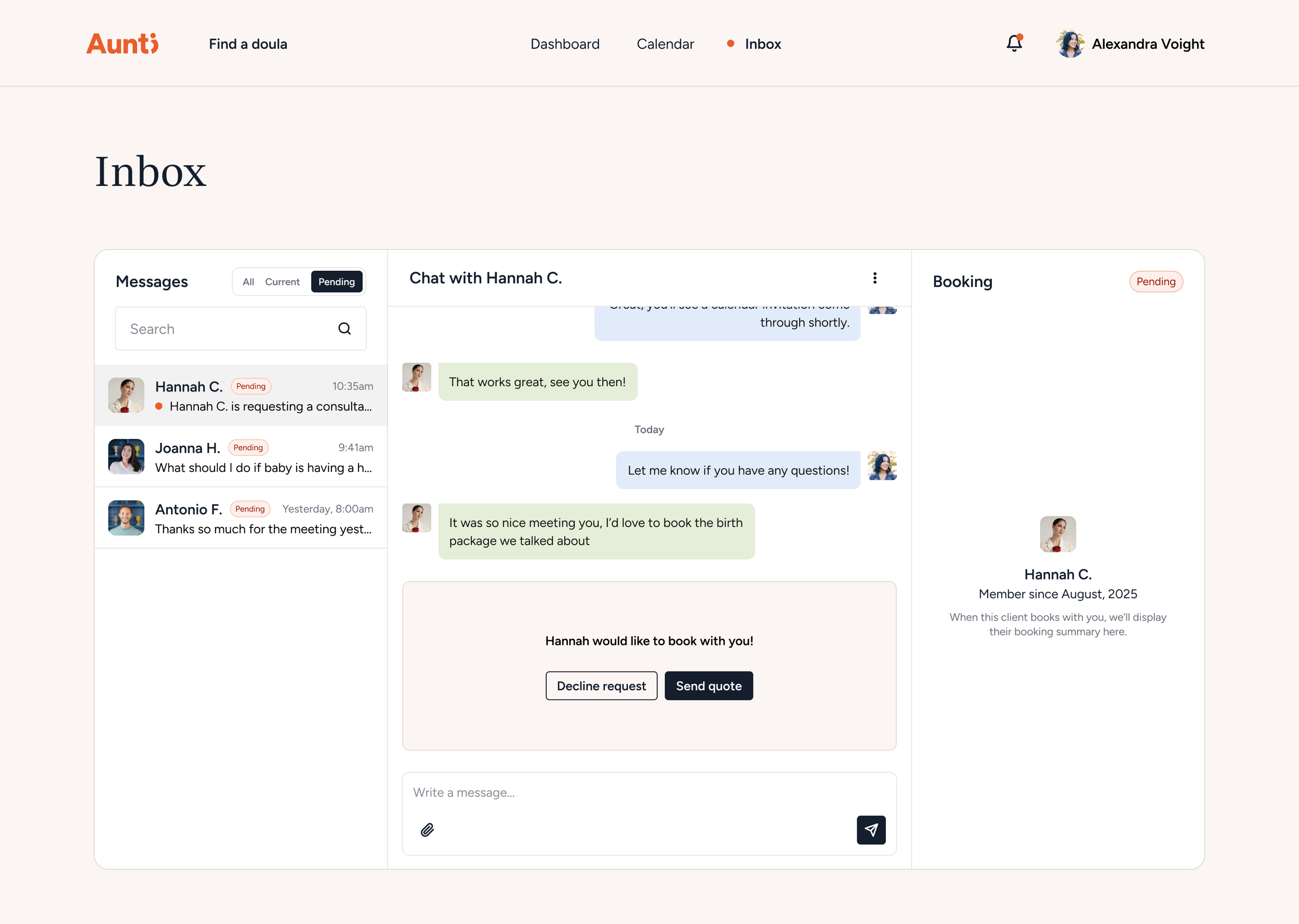
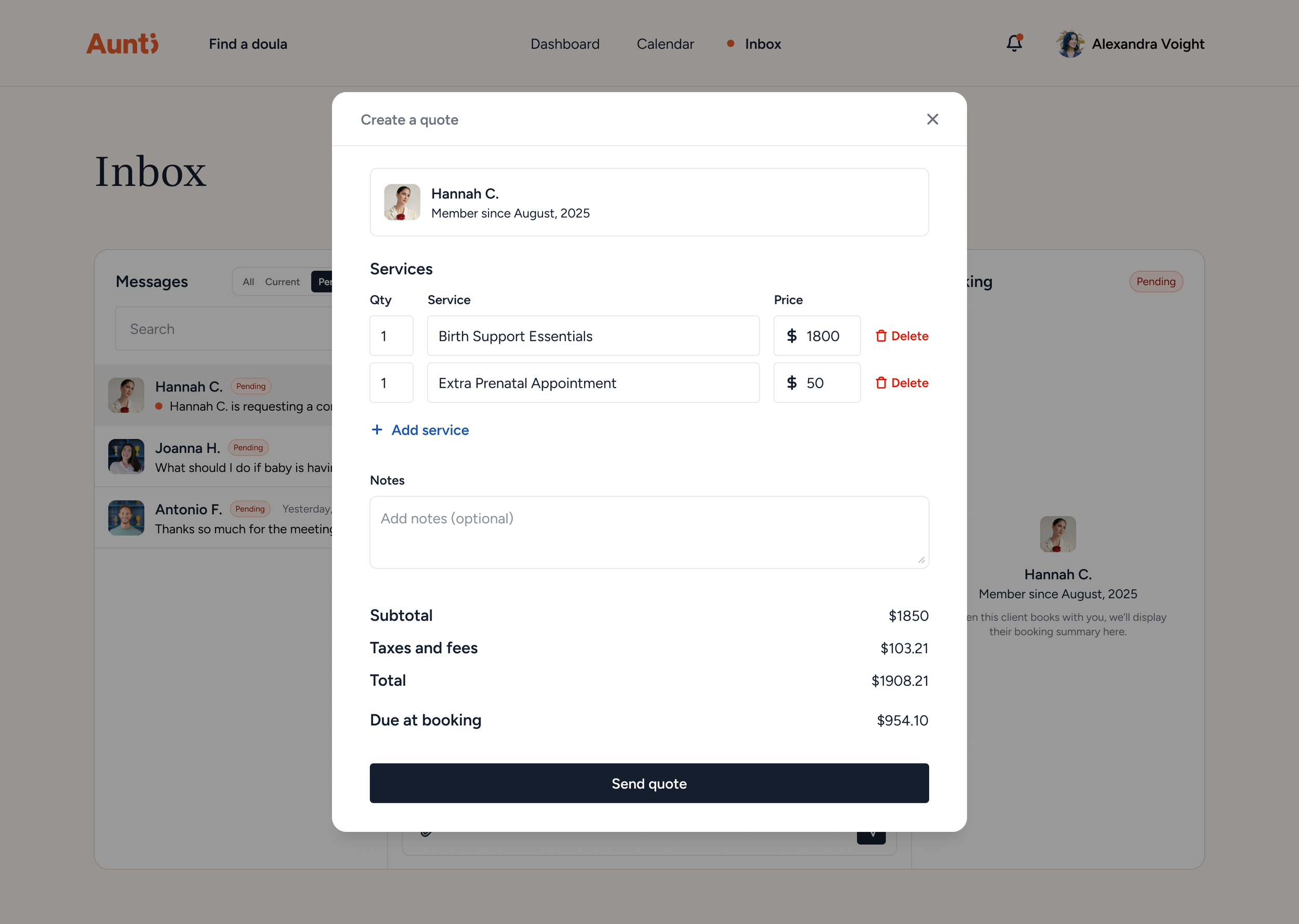
Connect the client relationship to the business workflow
Keep client conversations, booking details, quotes, and payments connected
Let doulas move from inquiry → quote → booking → payment without switching tools
Support both standardized packages and more customized arrangements
Reduce the need to duplicate client and service information across separate platforms
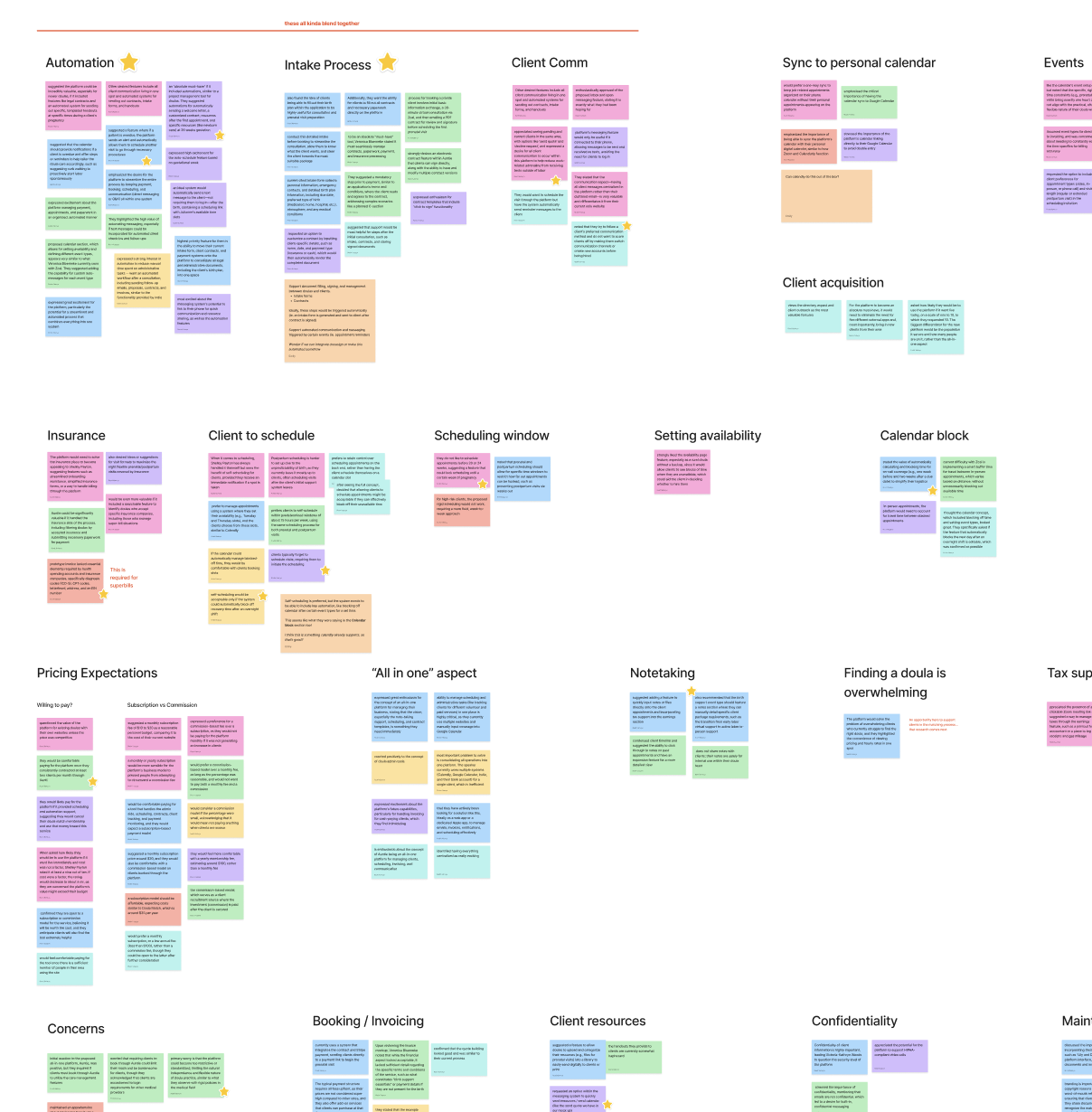
Research Takeaways
Automation was the universal ask.
Every doula wanted intake, contracts, and follow-up automated, and rated the concept nine or ten out of ten. One said she'd cancel her DoulaMatch membership to pay for it
The specific ask was sequence, not features: for example, an intake form that generates after a contract is signed, resources that send themselves at 36 weeks, reminders that go out without being written
Insurance wasn't a feature request. It was the condition of use.
It came up unprompted in nearly every interview. One doula gets 99% of her clients through insurance and spends a significant share of her week chasing insurers who withhold payment
Credentialing was the sticking point: confusing application language, inconsistent answers from representatives, months of unpaid work. One doula called fighting insurance the hardest part of the job, and said it had taken the joy out of work she loves
The directory's most requested missing field was which insurers a doula accepts
A doula reviewing our invoice mockup noted it lacked the superbill attributes
Doulas valued the product, but the willingness to pay was low
Willingness to pay clustered between $35 and $100 a year, benchmarked against DoulaMatch's annual fee
Several preferred a commission specifically so they'd pay nothing in slow months. One rated the platform a nine if free and a six once cost entered